Novarm's Mobile Picking Robot, Six Months In: A Warehouse Review
We tracked uptime, pick accuracy, and maintenance costs on a mobile picking robot deployed in a mid-sized fulfillment warehouse.

Vendor demos are choreographed. A six-month deployment in a working warehouse is not. We followed a mid-sized fulfillment operation that added one of Novarm's mobile picking robots to its floor and tracked the numbers that actually matter for a purchasing decision: uptime, pick accuracy, and maintenance cost.
Navigation and Uptime
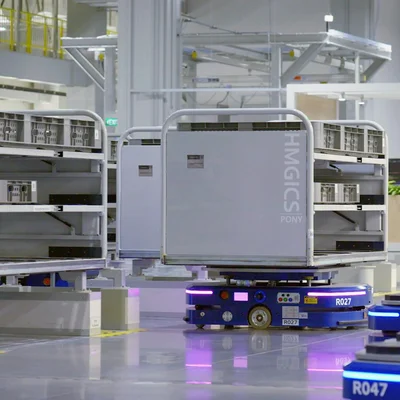
The robot navigates using onboard LiDAR and a pre-mapped facility layout, re-routing around temporary obstacles like stray pallets or spilled inventory without manual intervention in the large majority of cases we observed. Uptime over the six-month period was high, with the main interruptions coming from planned maintenance rather than unexpected faults. The two unplanned stoppages we recorded both traced back to facility changes - a shelving unit moved without updating the robot's map - rather than a hardware or software fault in the robot itself.
Pick Accuracy in Practice
Pick accuracy stayed consistent across the deployment period, with a slight dip during the first two weeks as the warehouse team learned to keep bin locations and the robot's map in sync. This points to an underappreciated cost of robotic picking systems: the accuracy ceiling depends as much on warehouse process discipline as on the robot's own sensors and grippers.
Maintenance Observations
- Battery packs required no replacement over the six-month period, with charging handled autonomously during low-traffic windows
- Gripper wear was noticeable but within expected range for the item mix being handled
- Software updates were applied remotely without floor downtime
Where It Struggled
The robot handled standard bin-and-tote picking well but slowed noticeably on irregular or loosely packaged items that didn't match its expected grip profiles. This is a limitation worth checking against your own product mix before buying - a warehouse handling highly uniform items will see better throughput than one with frequent oddly shaped or loosely packed inventory.
Cost Considerations
The upfront cost is significant relative to a single additional warehouse worker, and the payback period depends heavily on shift coverage - a robot running continuously across multiple shifts pays back faster than one covering a single shift's peak hours. Facility mapping and initial integration took longer than the sales process suggested, and that setup time should be factored into any rollout timeline.
Staff Adoption
Warehouse staff needed roughly a week to adjust workflows around the robot's presence, mainly learning to keep aisles clear of temporary obstructions and to report map discrepancies promptly rather than working around them manually. Sites that invested in this training upfront saw fewer unplanned stoppages than the two we recorded, suggesting the adjustment period is worth treating as a real project phase rather than an afterthought.
Verdict
Six months in, the robot has proven reliable for its core task, with the caveat that warehouse process discipline and product mix matter as much as the hardware specification. Facilities considering a similar deployment should budget realistic time for facility mapping and process adjustment before expecting full throughput, rather than assuming a plug-and-play result from day one.
More from The Aixi
 Buying Guides
Cobots vs. Traditional Industrial Robots: What Small Warehouses Need to Know
 Reviews
Hands-On Review: Lensar's Translation Earbuds for Travelers
 Edge AI